Why choosing the right house reef matters
Not every Maldives resort gives you coral and marine life directly outside your villa.
Some islands sit inside broad, sandy lagoons. The water looks spectacular from above, but reaching a substantial reef may require a boat trip. Other islands are encircled by coral, with marked channels leading from the beach to reef slopes and deeper water.
If snorkelling is important to you, that difference matters.
A boat excursion gives you a scheduled hour in the water. A genuinely accessible house reef lets you snorkel before breakfast, return in the afternoon and discover how the reef changes as the light, tide and marine life shift throughout the day.
There is no permanent scientific ranking of Maldives house reefs. Coral condition can change following warming events, storms and seasonal shifts, while turtles, sharks and rays are wild animals whose appearances can never be guaranteed.
However, five resorts in the Atoll Agency collection stand out for reef accessibility, underwater topography and the quality of their marine programmes.
What makes a great Maldives house reef?
A long list of possible animal sightings is not enough. The best house reefs combine four practical qualities.
The reef is close to the island
A house reef should be accessible without a boat. At the strongest reef islands, guests can reach coral through designated channels from the beach or approved villa entry points.
There are safe ways into the water
Coral should never be walked across. Proper entry channels allow snorkellers to pass over the shallow reef flat without standing on living coral.
Entry and exit points are also important when currents change direction or strength.
The underwater landscape has variety
Shallow coral gardens are excellent for observing smaller reef fish. Slopes, walls and drop-offs create different habitats and give confident snorkellers the chance to look into deeper water for passing rays, turtles or reef sharks.
The resort provides expert guidance
A marine biologist or experienced dive team can explain daily conditions, identify the safest route and help guests understand what they are seeing.
Even experienced snorkellers should complete an orientation before exploring an unfamiliar reef independently.
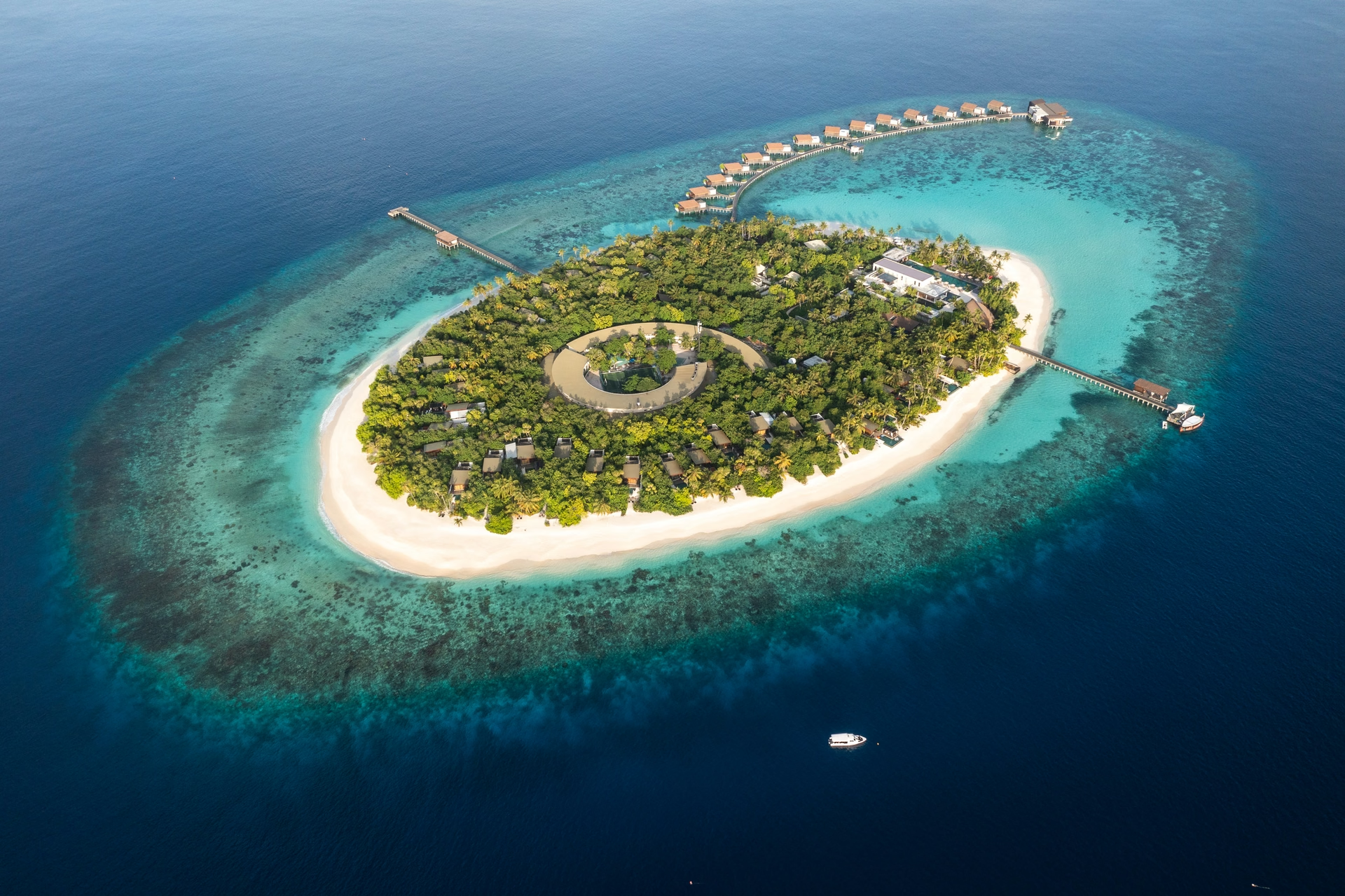
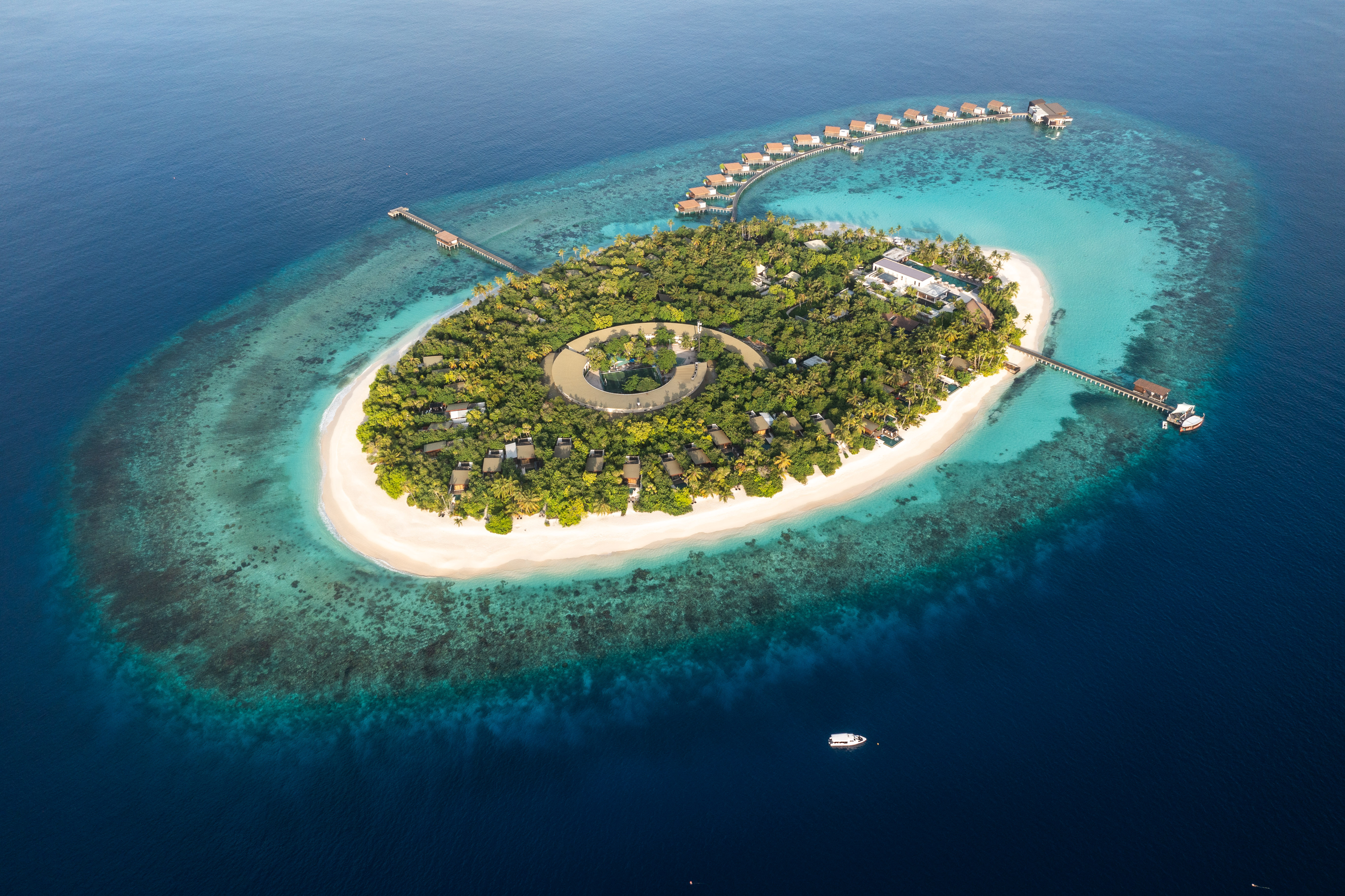
1. Park Hyatt Maldives Hadahaa
Best for: Extensive reef access around a remote natural island
At Park Hyatt Maldives Hadahaa, the reef is not a minor resort facility. It is one of the island’s defining features.
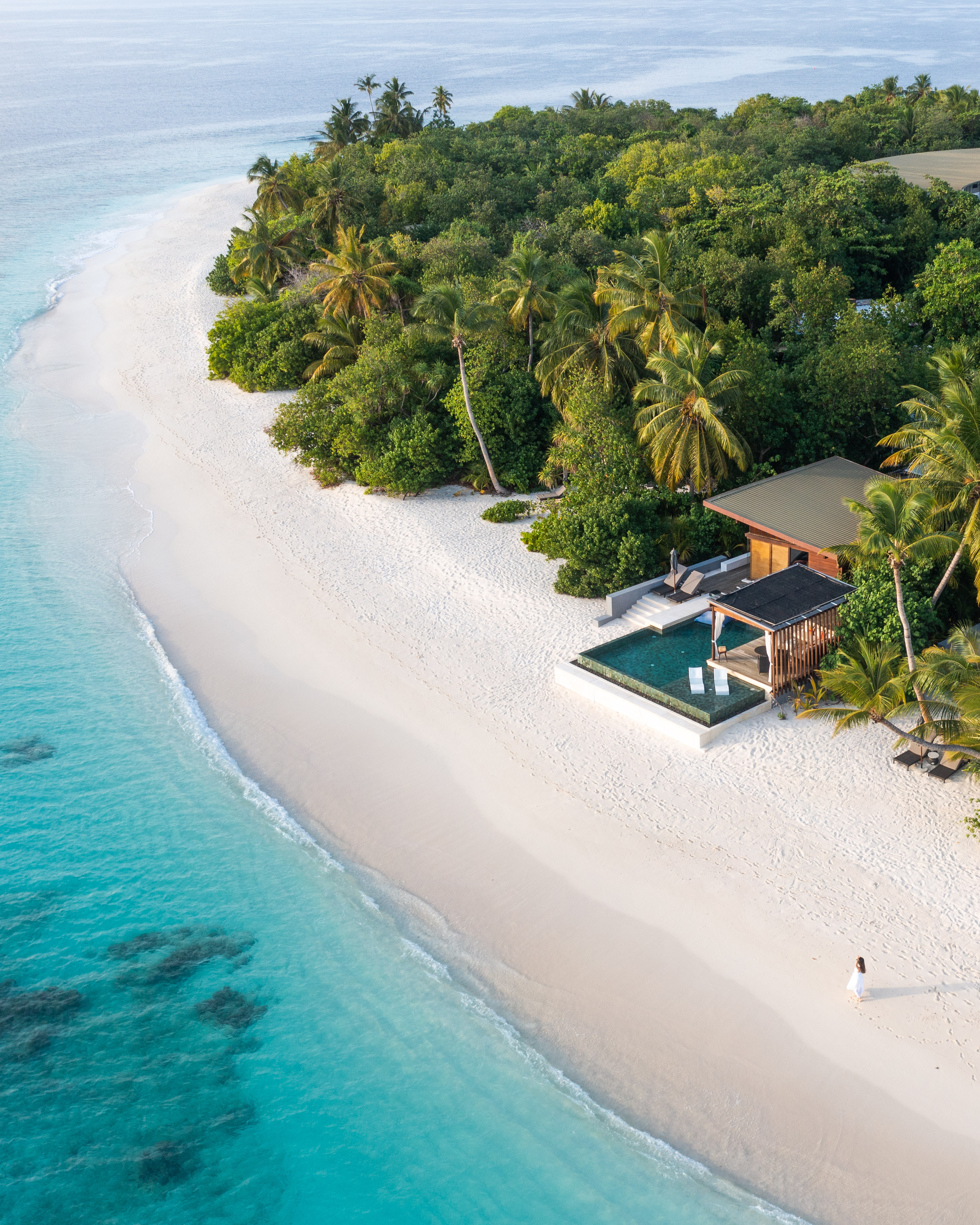
Located in North Huvadhoo, or Gaafu Alifu Atoll, Hadahaa is surrounded by a 360-degree house reef. The resort provides access from its beaches and selected villas, allowing guests to explore different sections rather than following the same short route each day.
Coral gardens descend towards deeper water around the island. The resort identifies turtles, reef sharks, eagle rays, nurse sharks and abundant tropical fish among the animals that may be encountered, although individual sightings are never guaranteed.
Guided snorkelling, night snorkelling, diving and freediving are available through the resort’s marine team. The Hadahaa Ocean Lab also gives guests the opportunity to learn about coral, plankton, sharks and the wider reef ecosystem.
Its remote southern location is part of the appeal, but it also makes the journey longer. Guests normally reach Hadahaa using a domestic flight followed by a speedboat transfer.
Why it stands out: Hadahaa offers one of the most extensive house-reef environments in the Atoll Agency collection, with marine exploration possible around almost the entire island.
2. Anantara Kihavah Maldives Villas
Best for: Easily accessible snorkelling and dramatic underwater topography
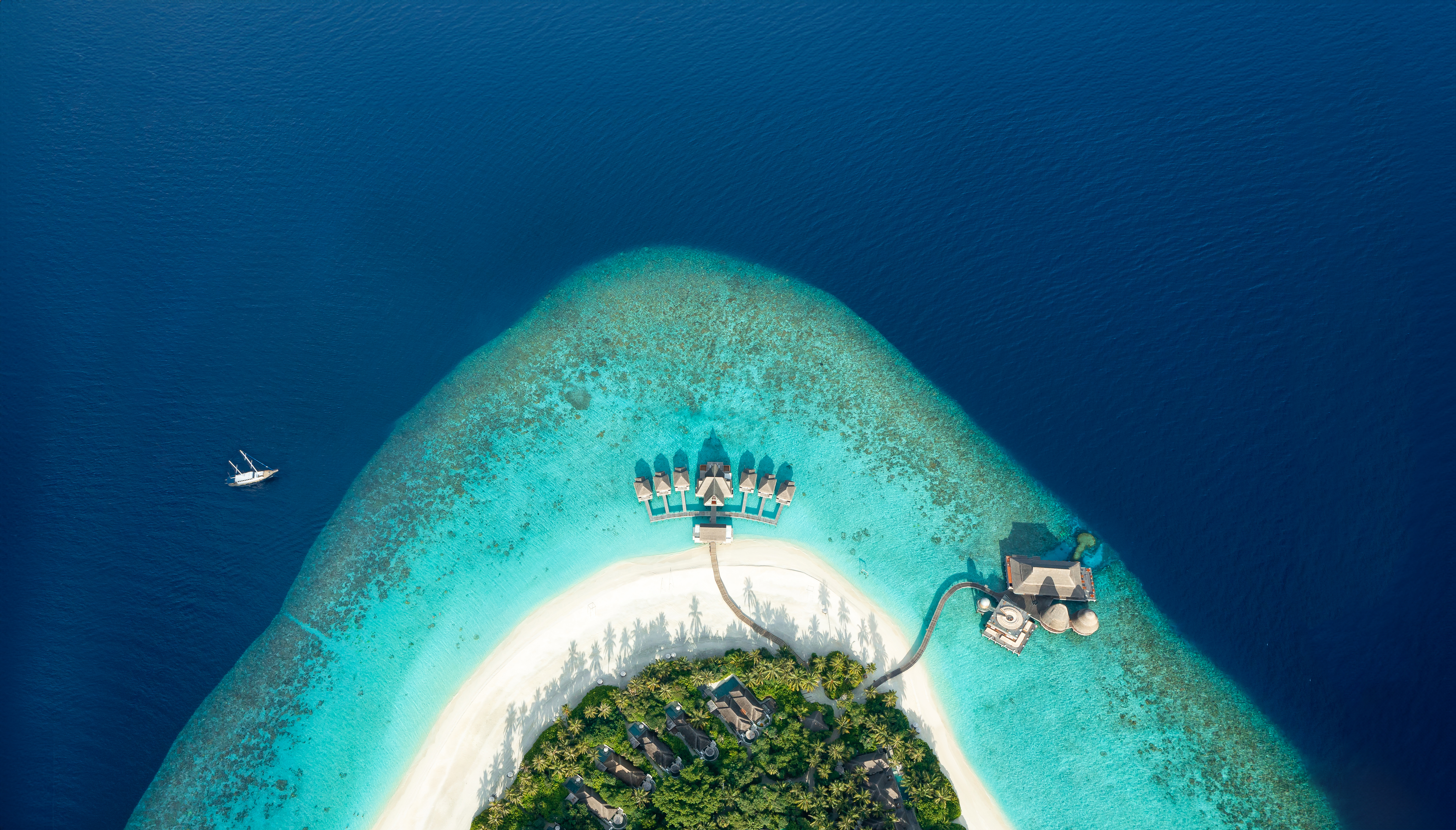
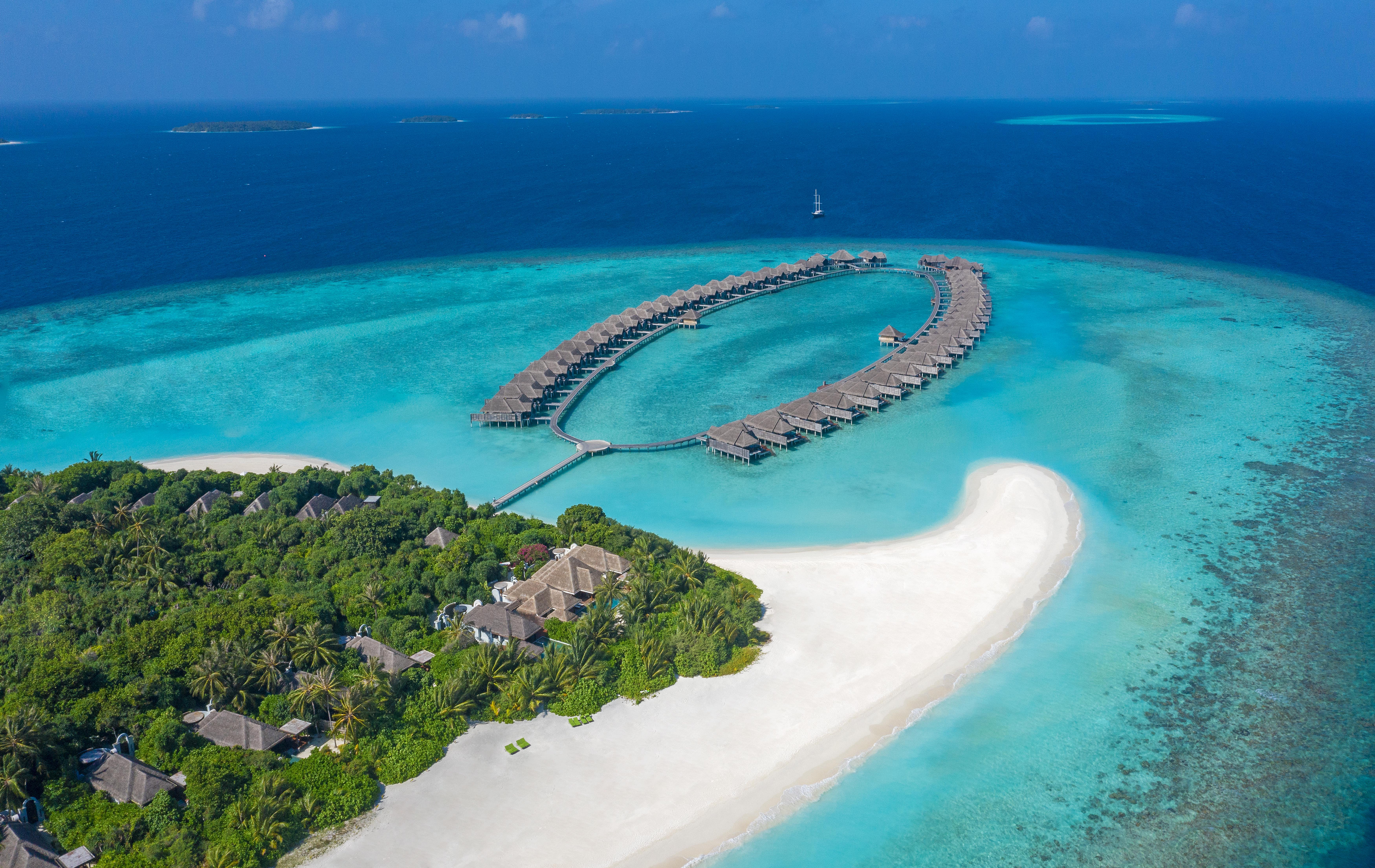
Anantara Kihavah occupies a natural island within the Baa Atoll UNESCO Biosphere Reserve. Its house reef surrounds the island and can be reached from the beach and approved overwater-villa access points.
The most distinctive section is the Golden Wall, also called the Yellow Wall. This vertical part of the reef descends to approximately 25 metres and is named after the gold and yellow soft corals found along its surface and overhangs. Much of its marine life can be observed at shallower snorkelling depths.
A resort-led study conducted during 2022 and 2023 documented approximately 300 fish species and more than 130 types of coral on the house reef. Hawksbill turtles, reef sharks, nurse sharks and numerous reef fish are among its recorded inhabitants.
Guests can snorkel independently in designated areas or join guided sessions. The resident marine team also leads talks, conservation experiences and children’s marine-biology activities.
Anantara Kihavah is close to Hanifaru Bay, but the famous manta-ray gatherings occur on a separate protected excursion—not on the resort’s house reef. Those visits are seasonal and sightings depend on plankton, tides and other natural conditions.
Why it stands out: Kihavah combines convenient reef access with one of the most interesting walls found directly beside a luxury Maldives resort.
3. Vakkaru Maldives
Best for: Families wanting reef access and a broad luxury-resort experience
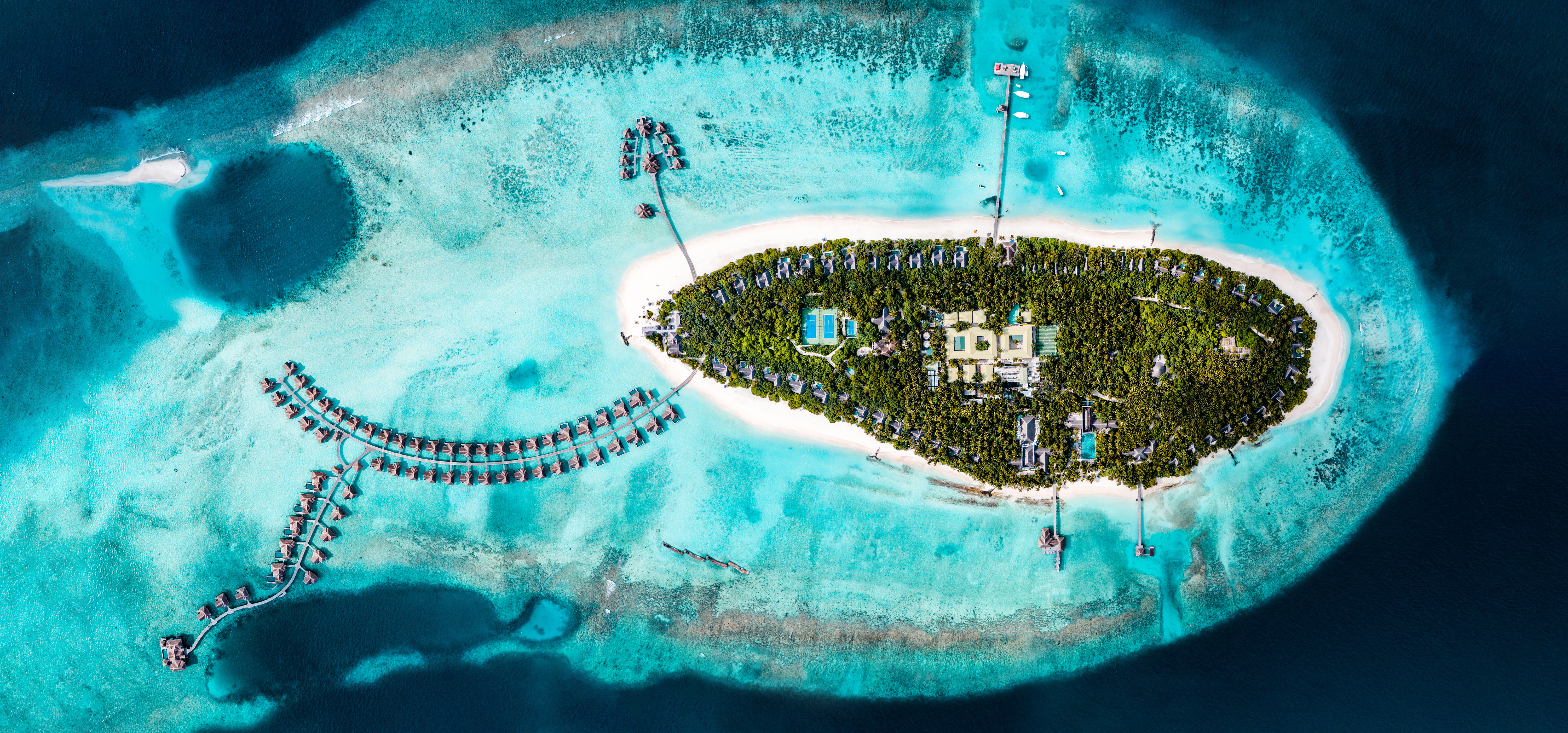
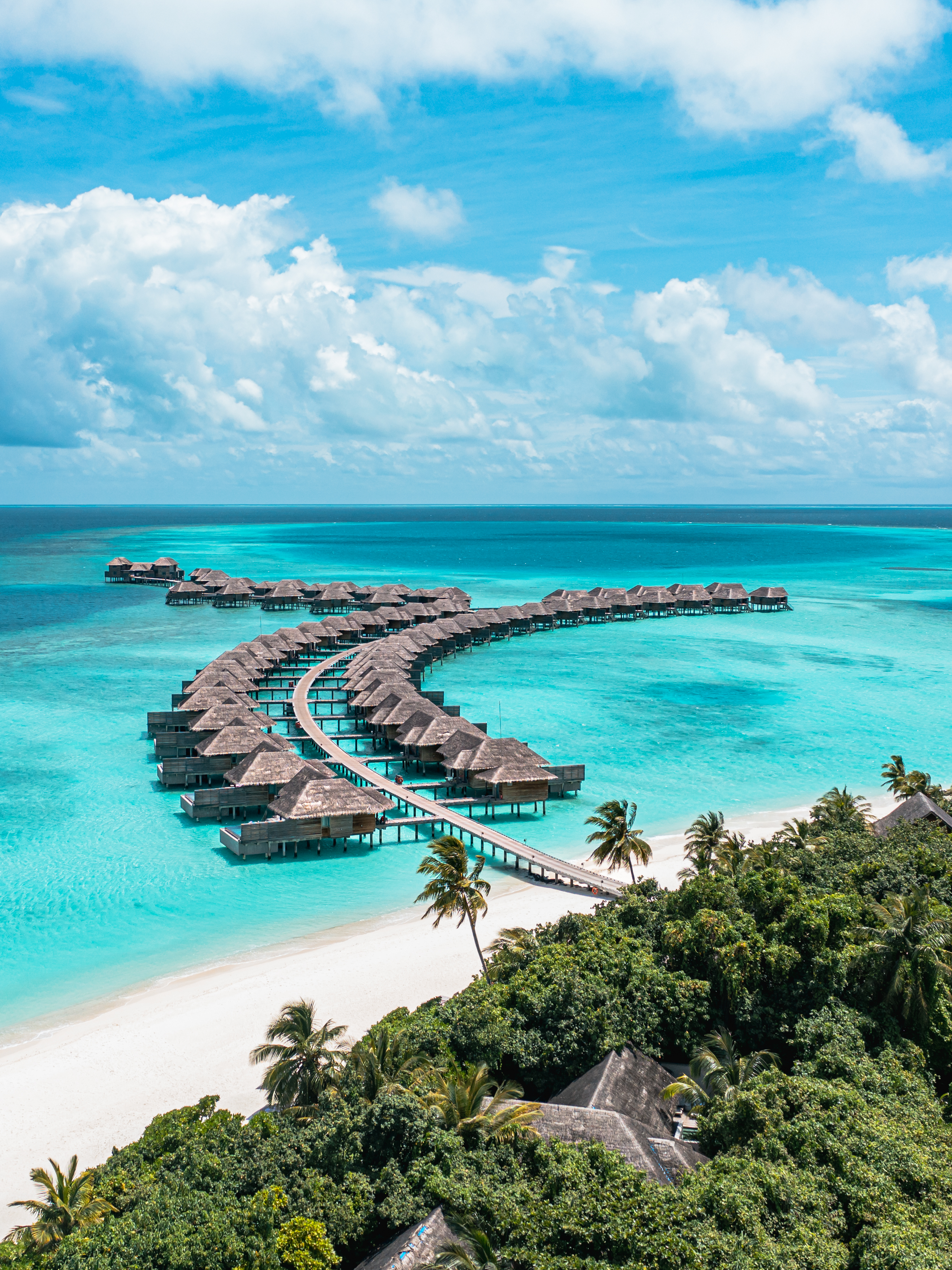
Vakkaru is a natural reef island in Baa Atoll, surrounded by beaches, deep blue holes and a house reef containing varied marine habitats.
The house reef is accessible close to the resort’s dive centre. Snorkellers may encounter clownfish, moray eels, groupers, turtles, eagle rays and reef sharks, depending on the day’s conditions.
Guided house-reef sessions are available, along with night snorkelling and UV-light snorkelling. The latter reveals fluorescent colours in certain corals and marine organisms that are difficult to appreciate during daylight.
Vakkaru is particularly suitable for families and mixed-interest groups. It offers a substantial choice of beach and overwater accommodation, children’s facilities, watersports and dining alongside its marine programme.
Not every villa provides identical reef access. Guests who intend to snorkel frequently should ask which accommodation is closest to the authorised entry channels rather than assuming every water villa sits above the best coral.
Why it stands out: Vakkaru balances a credible house reef with the facilities and accommodation range expected from a larger luxury resort.
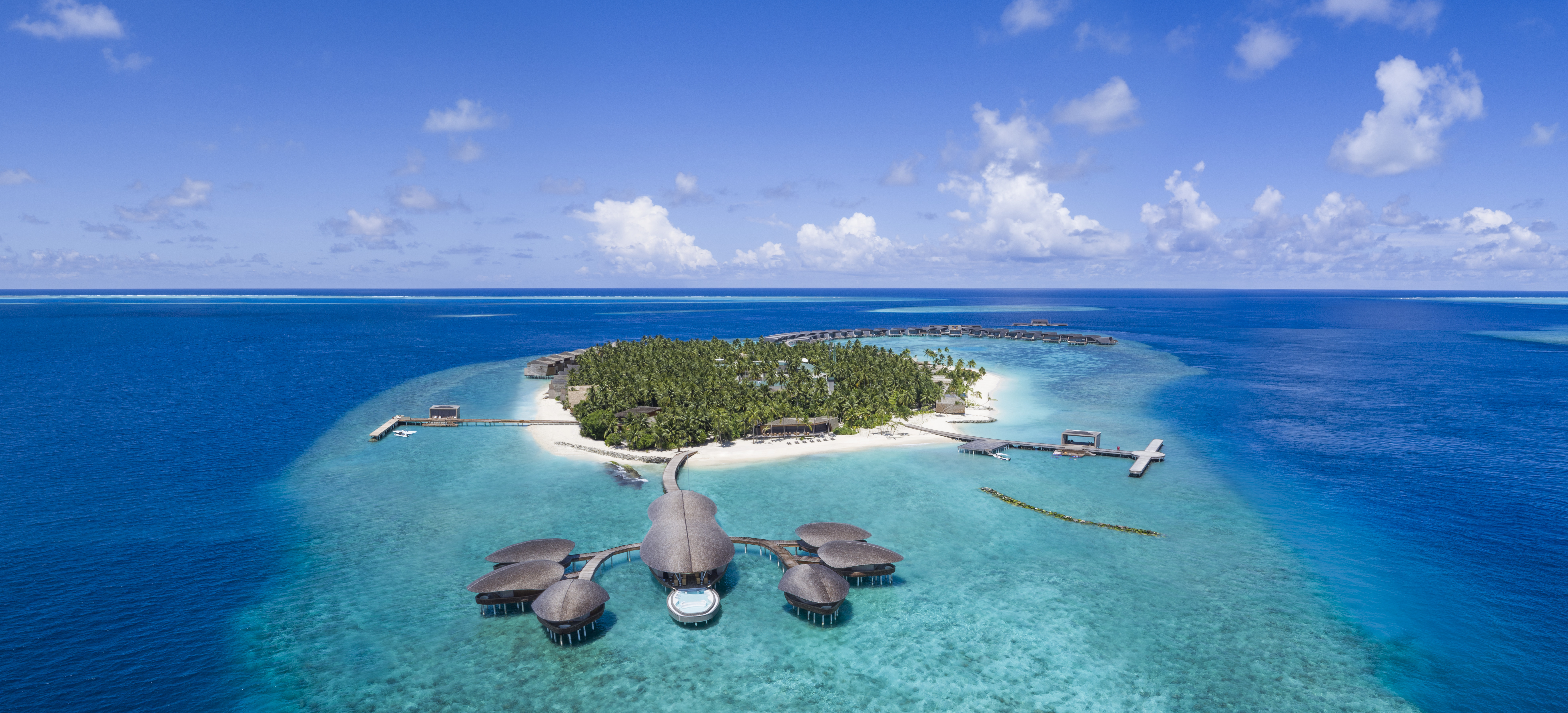
4. The St. Regis Maldives Vommuli Resort
Best for: Luxury design combined with rewarding resort-based snorkelling
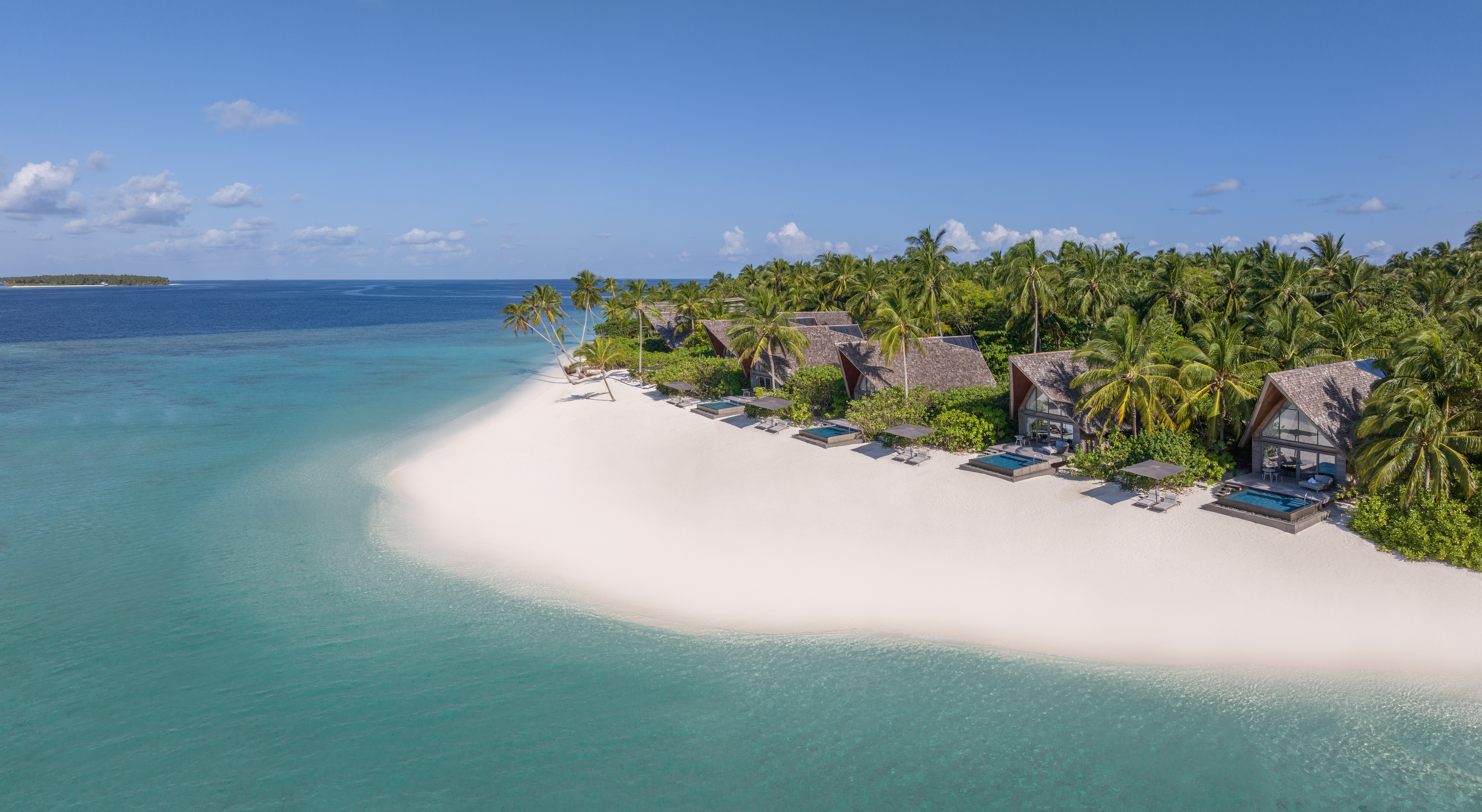
The St. Regis Maldives Vommuli occupies a private natural island in Dhaalu Atoll. Beyond its celebrated architecture and overwater Iridium Spa, it has a private house reef suitable for snorkelling and scuba diving.
The Vommuli Dive and Watersports Centre offers guided snorkelling, diving instruction and trips to sites throughout the atoll. Coral formations and tropical reef fish can be observed around the island, while turtles, reef sharks and rays may also pass through the surrounding waters.
The resort is a good match for travellers who want marine access without choosing a property defined exclusively by diving. Its restaurants, spa, family facilities and highly polished service remain major parts of the experience.
As at any reef island, direct water access depends on villa position and current conditions. Entering from an overwater-villa deck is not automatically suitable or permitted simply because steps lead into the sea. Guests should follow the dive centre’s recommended routes.
Why it stands out: Vommuli combines a legitimate house reef with some of the most distinctive architecture and comprehensive luxury facilities in the Maldives.
5. Huvafen Fushi
Best for: Couples wanting house-reef snorkelling close to Malé
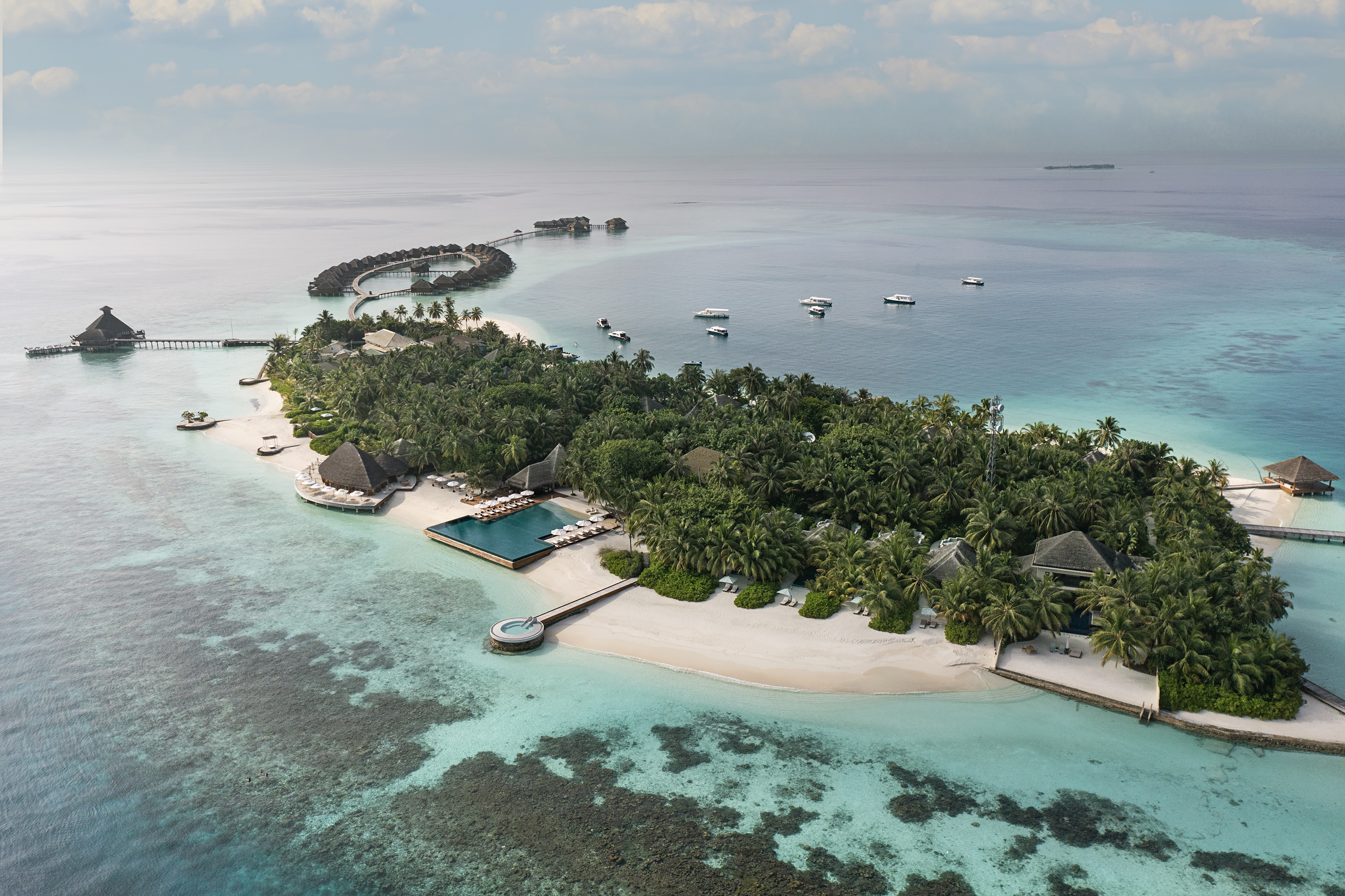
Huvafen Fushi is located in North Malé Atoll and reached by speedboat, making it the most convenient resort on this shortlist for travellers who want to avoid a seaplane or domestic flight.
Its marine team offers guided house-reef snorkelling, during which guests are shown appropriate entry and exit procedures and introduced to the smaller creatures that are easily overlooked without expert guidance.
Night snorkelling reveals another side of the reef as nocturnal fish and invertebrates emerge after dark. The resort also offers diving, turtle safaris and seasonal manta excursions to separate sites.
Huvafen’s appeal extends beyond the reef. It is an intimate, adult-oriented luxury escape known for its underwater spa treatment rooms, private-pool accommodation and romantic atmosphere.
For serious reef enthusiasts, Hadahaa or Kihavah provides a more extensively documented underwater environment. Huvafen is the stronger choice for couples seeking convenient snorkelling as one part of a private, sophisticated stay.
Why it stands out: It provides guided house-reef experiences within a short speedboat journey of the international airport.
Which Atoll Agency house-reef resort should you choose?
The best option depends on your priorities.
- Choose Park Hyatt Maldives Hadahaa if the reef is one of the main reasons for travelling.
- Choose Anantara Kihavah for a remarkable reef wall, marine biology and easy snorkelling in Baa Atoll.
- Choose Vakkaru Maldives for families and groups wanting reef access alongside extensive resort facilities.
- Choose The St. Regis Maldives Vommuli Resort for snorkelling combined with architecture, dining and highly polished luxury.
- Choose Huvafen Fushi for a romantic reef escape that can be reached from Malé by speedboat.
Is a water villa best for house-reef access?
Not necessarily.
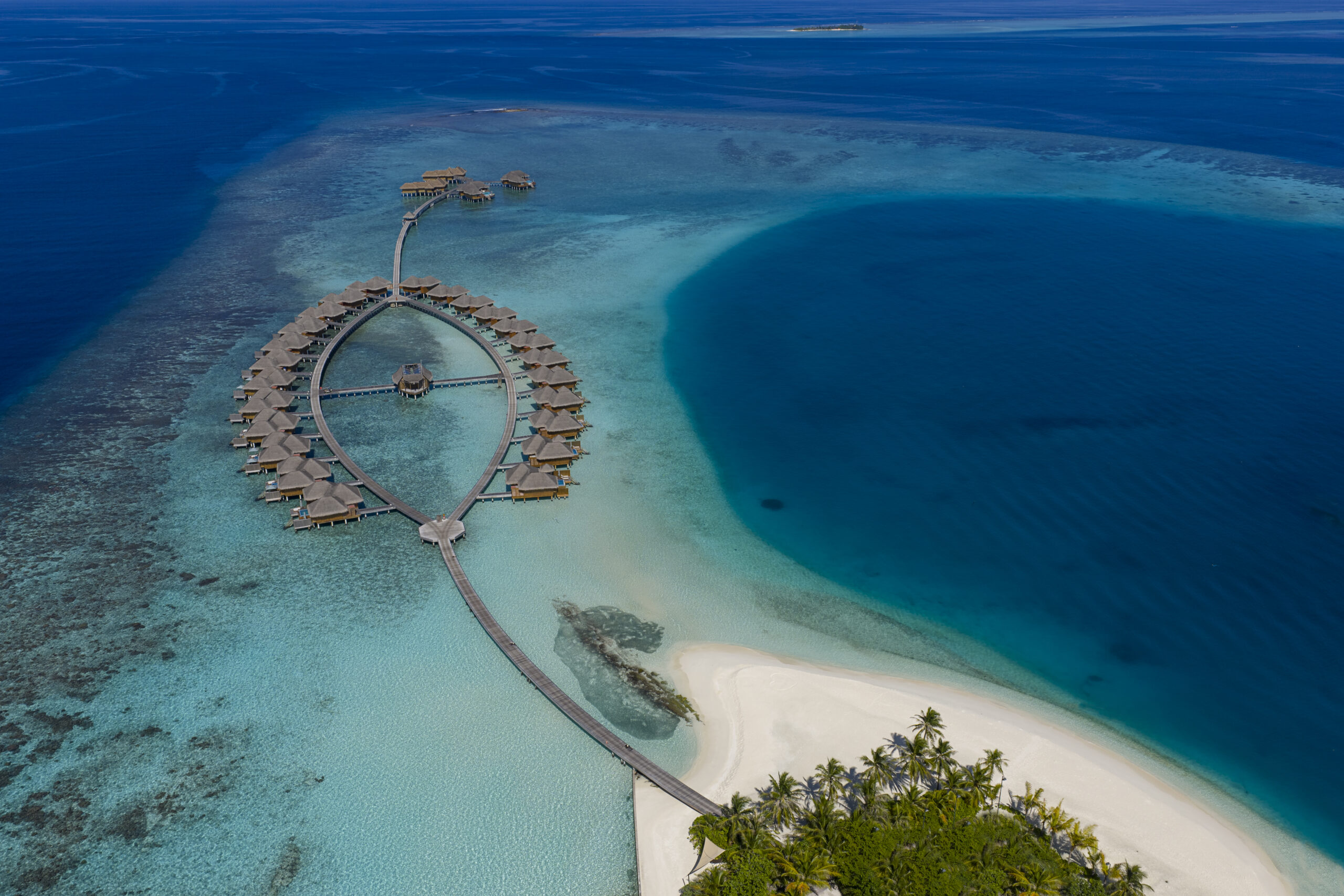
Many overwater villas are constructed above sandy lagoons rather than coral. Some have steps into water that is ideal for swimming but still a considerable distance from the reef edge. Others face currents that can make villa access unsuitable on a particular day.
A beach villa beside an approved snorkelling channel may provide easier and safer reef access than a water villa.
Before choosing a villa, ask:
- How far is the reef edge from the nearest entry point?
- Which villa categories are closest to the snorkelling channels?
- Can guests snorkel independently?
- Is a safety orientation required?
- Is equipment complimentary?
- Does the resort provide life jackets or flotation aids?
- Which areas are suitable for beginners?
- How strong are the typical currents?
When is the best time for house-reef snorkelling?
The Maldives offers year-round snorkelling, but there is no month when every reef will be perfectly calm and clear.
January to March is the recognised dry season and generally brings more sunshine and less rainfall. Surface conditions can be calmer, making this a popular period for beginners and families.
From approximately mid-May to November, the southwest monsoon creates more variable weather and water conditions. Rainfall and wind become more likely, while additional plankton may reduce visibility in some locations.
Conditions can change between different sides of the same island. Tide, wind direction and current may matter more on a particular day than the season itself.
Always ask the marine or dive team where—and when—it is safest to enter.
Will you see turtles, sharks and manta rays?
Turtles and small reef sharks inhabit many Maldivian reefs, but no resort can guarantee a sighting during a specific snorkel.
Manta rays are even less predictable. Resorts in Baa Atoll may operate seasonal excursions to Hanifaru Bay, while other atolls have their own feeding and cleaning sites. These experiences usually involve a boat transfer and should not be confused with ordinary house-reef snorkelling.
A credible resort should explain the difference between animals occasionally seen around its reef and encounters requiring a dedicated excursion.
How to snorkel without damaging the reef
Never stand or walk on coral, including sections that appear dead. Coral structures are fragile, and damaged areas still provide habitat for marine life.
Use marked channels, keep your fins above the reef and maintain a respectful distance from every animal. Do not touch, chase or feed turtles, rays, sharks or fish.
Snorkel with another person, stay within your abilities and check the current before every entry. If the resort recommends a guide or flotation aid, follow that advice.
The best house reefs remain special only when visitors treat them as living ecosystems rather than aquatic attractions.
The final verdict
For the strongest overall house-reef experience in the Atoll Agency collection, Park Hyatt Maldives Hadahaa takes the lead.
Anantara Kihavah follows closely, particularly for travellers who want accessible reef snorkelling, a dramatic coral wall and an established marine-biology programme.
Vakkaru, The St. Regis Vommuli and Huvafen Fushi offer different balances of reef access, family facilities, design, privacy and convenience.
The right resort is not simply the one promising the most marine life. It is the island where the reef access, accommodation and wider experience all suit the way you want to travel.
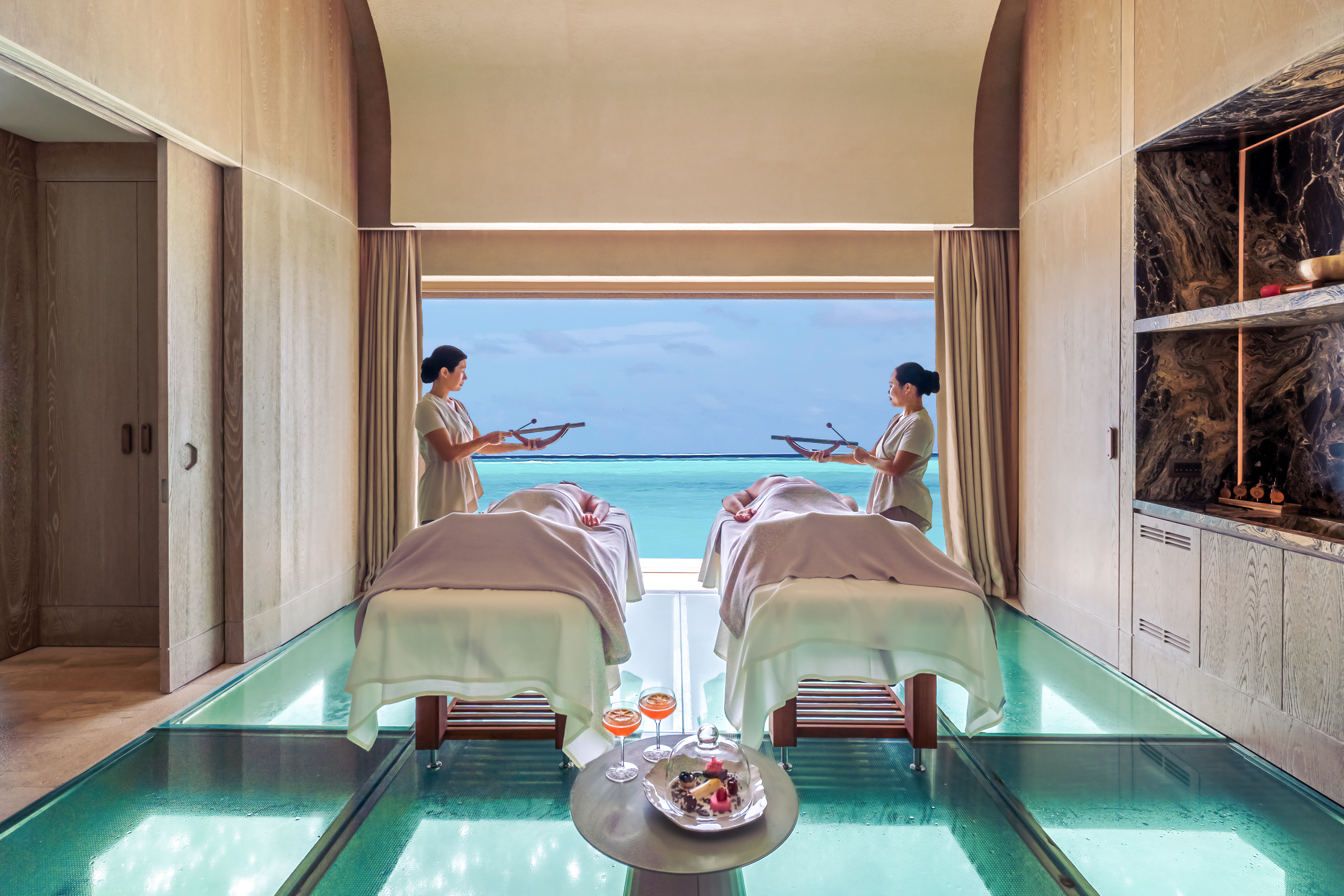
Wellness in the Maldives: Where to Actually Switch Off
From personalised wellbeing programmes to barefoot yoga and restorative spa rituals, these are the Maldives resorts that take wellness beyond the occasional massage.
-2.jpg)
When Is the Best Time to Visit the Maldives? A Month-by-Month Guide
The Maldives is warm year-round, but sunshine, rainfall, marine life, prices and sea conditions change with the monsoons. Here is how to choose the right month for your trip.